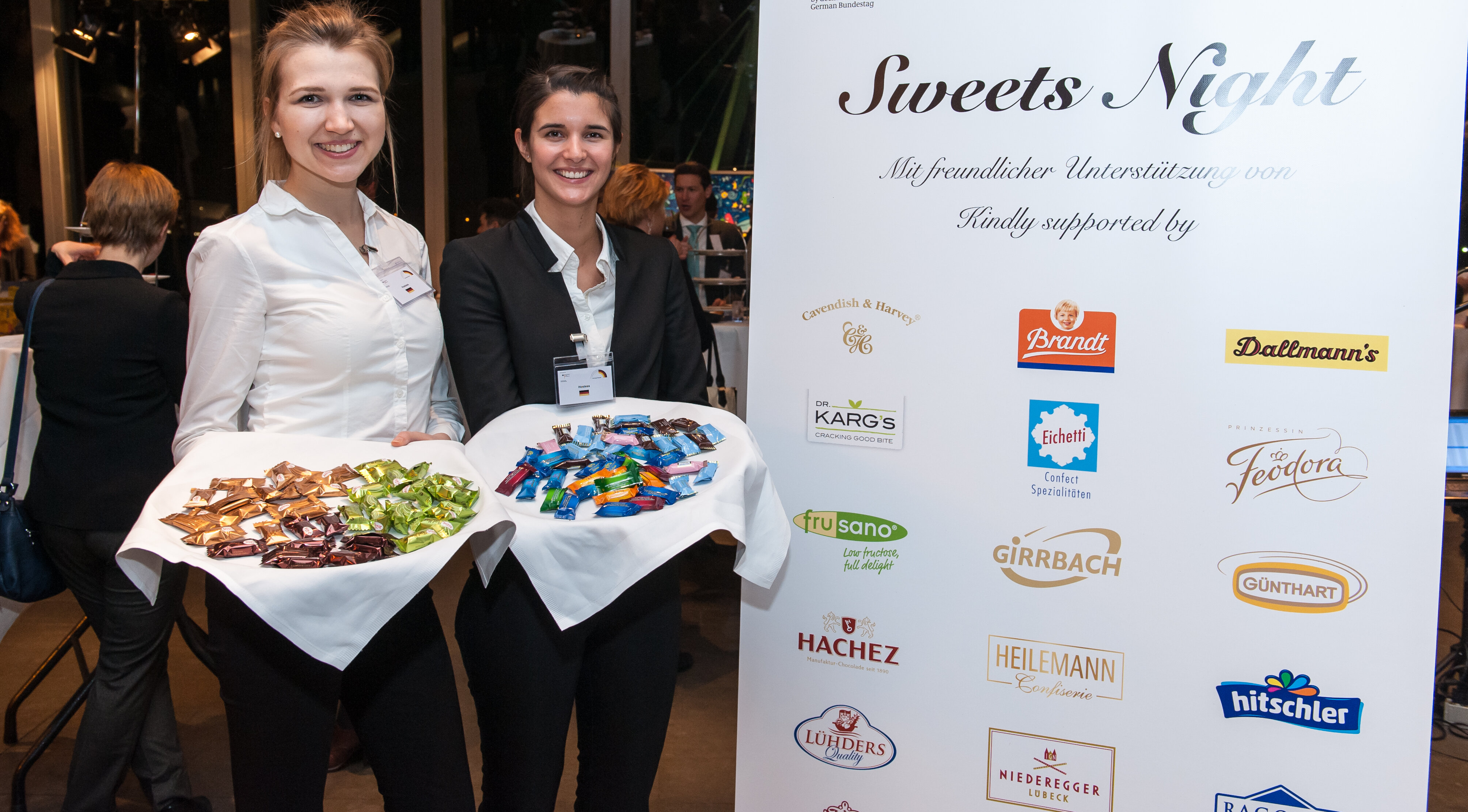

Sugar Confectionery Products

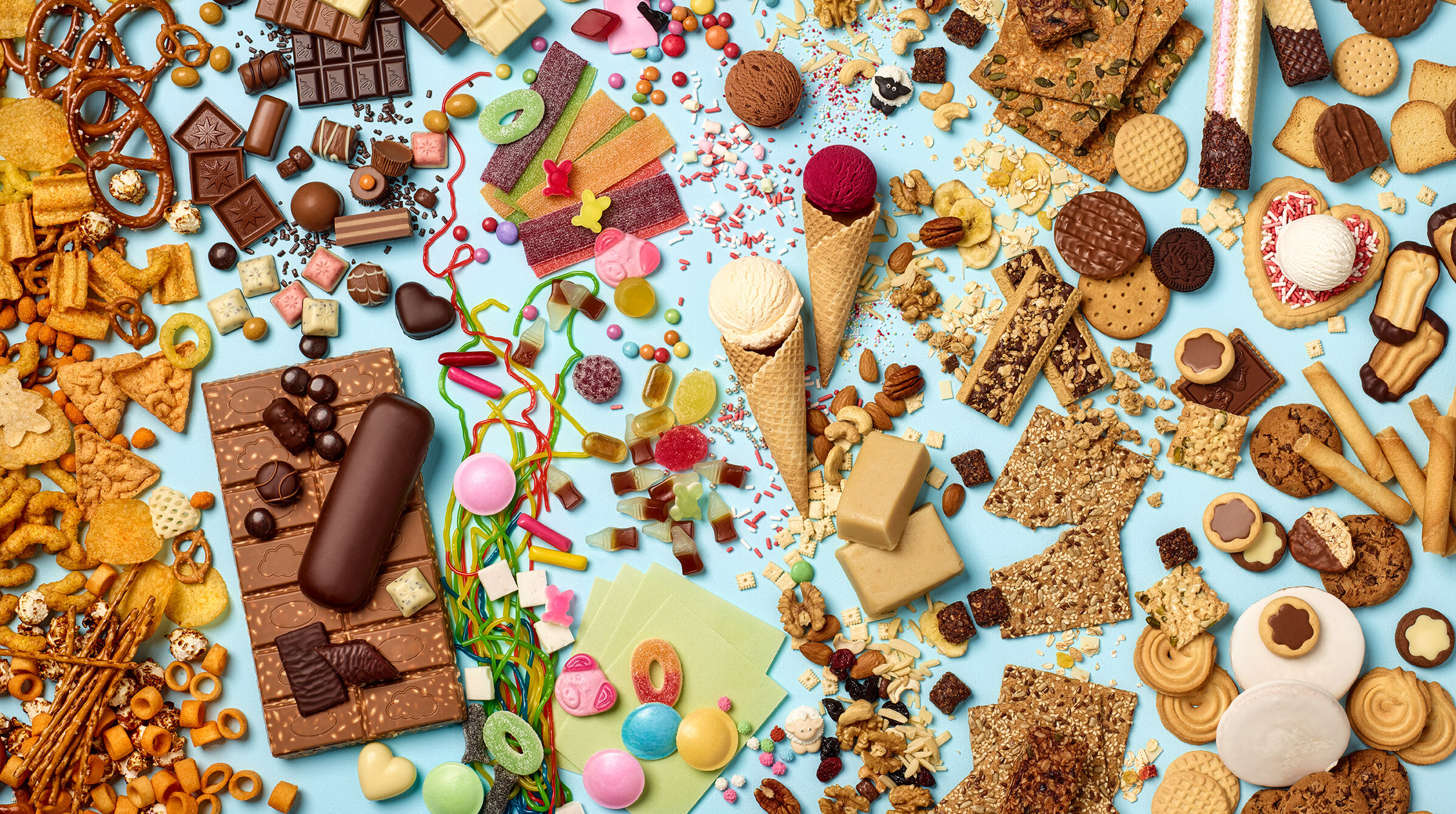
Sugar confectionery comprises many different products, such as sweets (hard and soft toffees), gumdrops, marzipan, compressed confections (sweets in tablet form) and lozenges, coated sweets, liquorice goods, foamed confectionery, candied fruits, jelly products and fruit pastes, nut crunch, fondant, couvertures, chewing gum, sherbets and drink powders, French nougat, truffles, Eiskonfekt (cool-melt chocolates), and sugar-free confectionery.

Sweets, also called caramels, represent the largest group of confectionery and are to be found on the shop shelves in the most diverse forms and colours, tastes, and consistencies. Caramels mostly come in bite-sized pieces and may be solid or filled; depending on their water content, they are sold as hard caramels or soft caramels (soft and chewable).

Throat drops, cough drops, and peppermint drops, also known as "soothers and suppressants” in technical jargon, characteristically contain herbal extracts and essential oils (eucalyptus, menthol). The addition of aromas and acidity is characteristic of fruit drops. Fruit and plant extracts and various colourings lend the various products their particular characteristics.

Caramel toffees are yet another group of sweets. They are basically made of milk products, butter, and sugar. Milk protein and sugar caramelise at higher temperatures. This is how the typical caramel aroma and special colouring evolves. Various flavour variations, such as nuts, almonds, honey, and coconut, are created by adding the corresponding raw materials.

Gumdrops do not belong to the category hard and soft caramels. They have a soft and frequently also elastic/chewy consistency. They are mostly brightly coloured and are frequently fruit-shaped or animal-shaped. Gumdrops usually have a shiny surface and are transparent (jelly babies, wine gums); some are even sugared. Gum pastilles are relatively hard and therefore last longer in the mouth. They are also used as drug carriers in the pharmaceutical industry.

Sugar confectionery also includes marzipan. Fine marzipan, with a high almond content, such as Lübecker Marzipan with its well-guarded recipe, is considered to be especially good. The term is protected and subject to stringent quality requirements. The soft consistency of marzipan makes it particularly suitable for forming into a very diverse range of objects. Loaves, Santas, piglets, types of fruit, as well as town and city coats of arms and company logos are all manufactured from marzipan, formed, and sometimes enhanced using colour decorations. The addition of candied fruit, chocolate chips, and liqueurs is typical.French nougat, Eiskonfekt (cool-melt chocolates) and truffles are also counted as sugar confectionery. One thing all three products have in common is the use of various fats in their manufacture. These are responsible for the melting behaviour which varies from one product to the next.

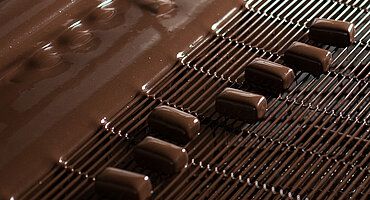
French nougat, Eiskonfekt (cool-melt chocolates), and truffles are significantly softer than chocolate. Cool-melt chocolates (Eiskonfekt) are very soft at normal room temperature and are therefore eaten when cooled. Cool-melt chocolates are only sold in solid, non-figure-shaped pieces weighing up to 20 grams, making them more easily distinguishable from other types of chocolate. Cool-melt chocolates have a high coconut fat content, triggering a characteristic effect: the melting action absorbs heat, producing a cooling sensation in the mouth. This effect is further enhanced by the addition of menthol and other essential oils.

Liquorice is an ancient remedy and foodstuff. Historical finds in Egypt document that the extract of the liquorice root was known to be a remedy in very early times.Lacrosse products contain at least 3% of dried liquorice extract. Besides raw liquorice, other raw materials are also added to the mass: glucose syrup, wheat flour, modified starch or gelatine, common salt, and flavourings. Glycyrrhizin is a natural component of the liquorice root. At a content of under 0.2 grams per 100 grams of finished product, the latter is termed liquorice; at higher content levels the product is known as strong liquorice. Salty liquorice from Germany has a maximum ammonium chloride salt content of 2%. Imported products may have an ammonium chloride salt content of up to 7.99% and must be labelled as extra strong adult liquorice which is unsuitable for consumption by children.

Raw liquorice mass is rock-hard and must first be dissolved in water before it can be processed further. Other ingredients are also added during this process and finally the mass is boiled until it reaches the desired consistency. Starch is added for the purpose of gluing the ingredients together. Shaping is carried out in much the same way as in manufacturing gumdrops, or by way of extruding the mass through shaping dies (particularly liquorice sticks and liquorice wheels). The manufacturer of liquorice confectionery involves extruding various coconut masses, fruit masses, and chocolate masses together with the liquorice through the corresponding dies.

Sugar-Free Confectionery

Instead of sugar, sugar-free confectionery contains so-called bulk sweeteners (such as isomalt, mannitol, sorbitol or xylitol) and intense sweeteners (such as acesulfame, aspartame, cyclamate). Compared to sugar, intense sweeteners do not affect the insulin and blood sugar levels of the body at all and bulk sweeteners do so only marginally. This makes them particularly suited to diabetics. Fructose, in particular, is also counted among the bulk sweeteners suited to diabetics.

Generally speaking, a sugar-free version of almost any described sugar confectionery is thinkable, e.g. sugar-free marzipan for diabetics. The highest sales volumes, however, are generated by sugar-free sweets and chewing gums.

Through the growing consumer consciousness about nutrition and fitness, sugar-free products have become tasty and popular alternatives, being both low in calories and kind to the teeth.

Please note: more information on sugar confectionery can be found in the brochure "Welt der Zuckerwaren" (The World of Confectionery) on the BDSI internet page of the product group "Zuckerwaren” (sugar confectionery):Brochure "Welt der Zuckerwaren"


Broschüre "Welt der Zuckerwaren"

Manufacturers

German Sweets Manufacturers from A to Z

Products List

Please select the desired sweets category. The corresponding manufacturers will then be displayed

Sweets Export Guide (SEG)

Sweets Export Guide (SEG): The official purchasing handbook of the German sweets-exporting industry, published by German Sweets e.V.